The sun hangs heavy over Hout Bay, pressing warmth into the concrete of Eyethu Skatepark. The air hums with life. Children around me are playing tag, using the ramps to skate up and down and perform tricks, and somewhere behind it all, laughter rises from a basketball court, blending with the sharp shouts from a nearby football pitch. From the other side of the park, a young man with dreadlocks and a big smile walks towards me in an easy stride. The young man’s name is Wonga Lucas and today, he will show me his home – the township Imizamo Yethu.
About Imizamo Yethu
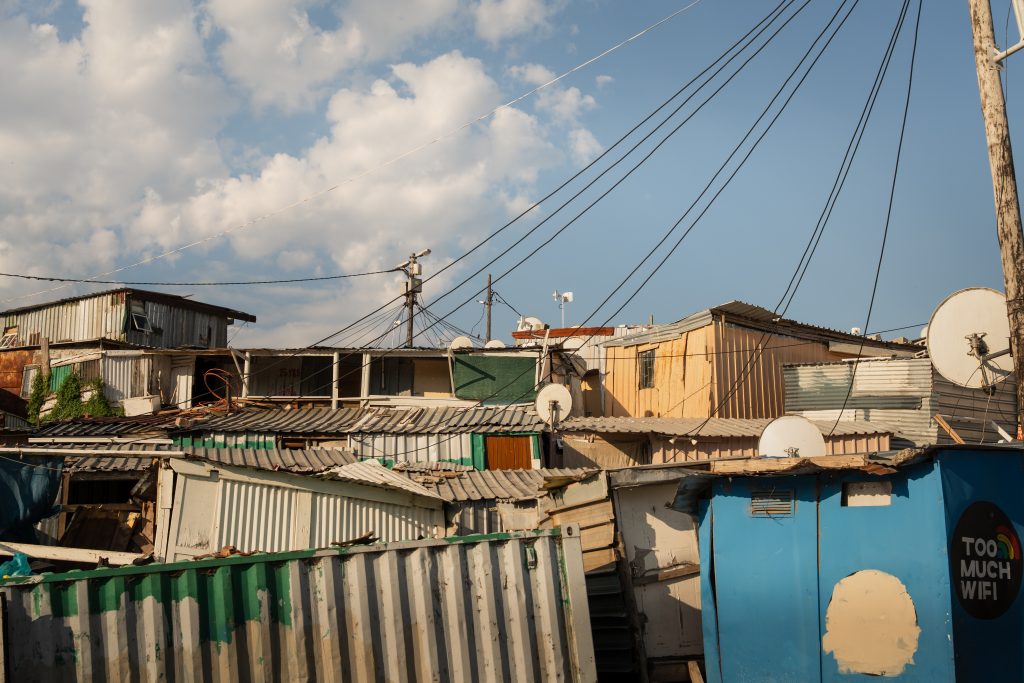
Imizamo Yethu, or IY as it is known to local residents, means ‘our common effort’ in the Xhosa language. It is an 18-hectare informal settlement that clings to the mountainside above Hout Bay, Cape Town, and was established in the early 1990s when 450 families that had been living in shacks around Hout Bay were relocated here. Today, there are around 35,000 people living in formal housing according to the records, but the estimated number including unregistered and foreign individuals living in informal housing exceeds 75,000.
Hout Bay itself feels like a microcosm of South Africa, three worlds pressed into one valley. A suburb of Cape Town where a wealthy, mainly White Community from the Valley, the Black African Community in Imizamo Yethu and the Coloured Community from Hangberg live alongside each other.
Wonga was born in the Eastern Cape and moved to Cape Town with his mother and six siblings as a baby. After pursuing a degree in film and digital media, he spent a year and a half working as a chef in the culinary industry. However, he had to stop working in the kitchen due to health issues, and went into the tourism industry. It all started with one of Wonga’s friends, a white German guy, who asked to stay with him in the township to learn more about his life and the community in IY. At the end of his stay, his friend brought over 12 of his international friends and asked Wonga to show them around the township and cook for them. What started as hospitality has now turned into something larger, a profession. Today, he runs a company called WongaTours, offering township tours that are less about sightseeing and more about unlearning. “I don’t do tours”, he tells me later. “I do experiences.”
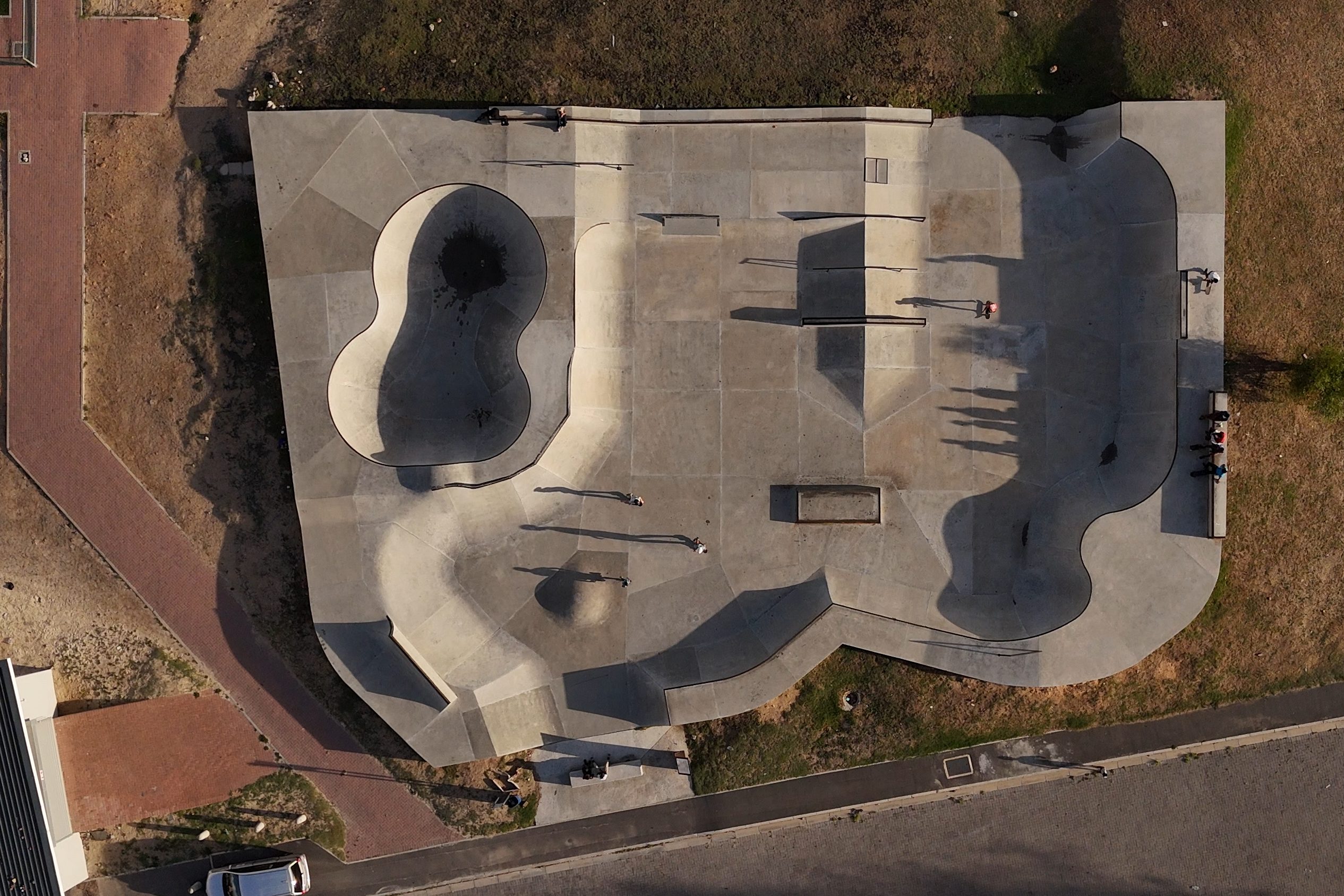
We start our tour at the skatepark, a meeting point between the three divided neighbourhoods, both physically and symbolically. When I look up to my right, I see thousands of colourful shacks stretching up the mountain, layers of iron sheets nailed together, clinging to every available centimetre. Most are made out of tin and wood, only a few have sturdy concrete walls. To my left, the broad avenue curves towards Penzance Estate, where oak trees frame large houses hidden behind electric fences and barbed wire. Two realities, separated by little more than a road. A contrast that couldn’t be any more striking.
The skatepark is a representation of the efforts to bring the three communities together, Wonga explains. It took over three years of fundraising 1.5 million Rand, involving both local companies, individual donors as well as countrywide sponsors. Since its inauguration, there hasn’t been a single day where it wasn’t used, and it is loved by young and old from all sides of the valley alike. It is an example of togetherness, shared passions and partnership that should be an inspiration to all. Twice a week, there is a social project that teaches kids how to skate. On Fridays, they sit together and do schoolwork. To Wonga, skating is a lever of change – if the children aren’t raised in social projects like his, they will be raised by the streets.
Life in the Township
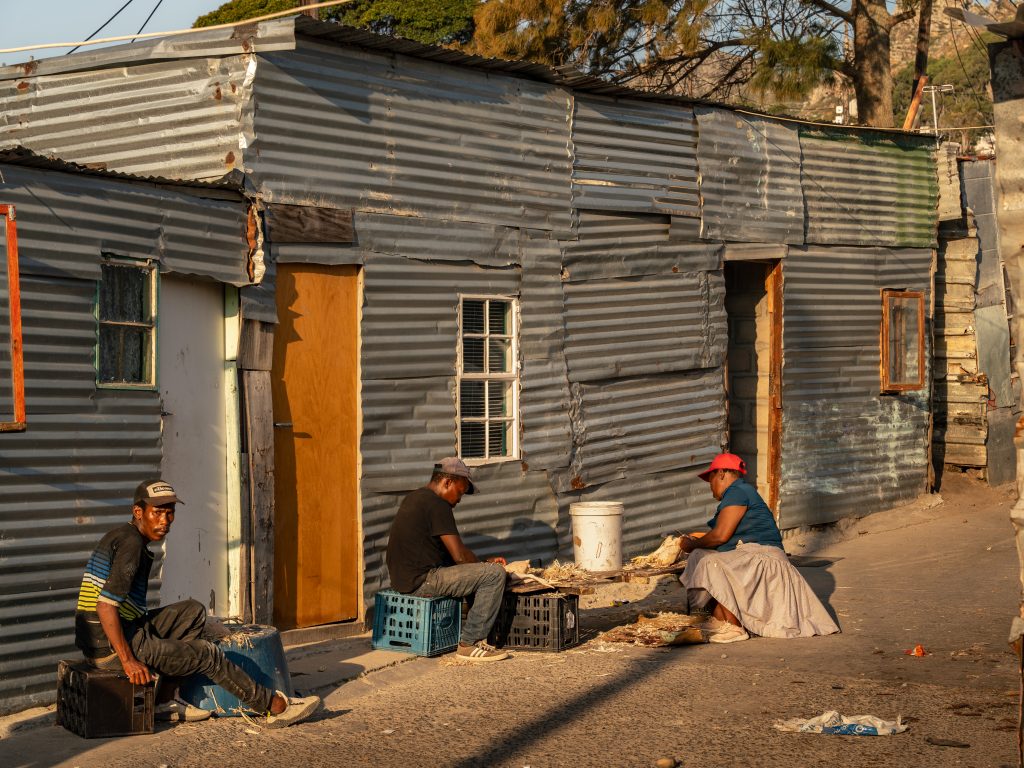
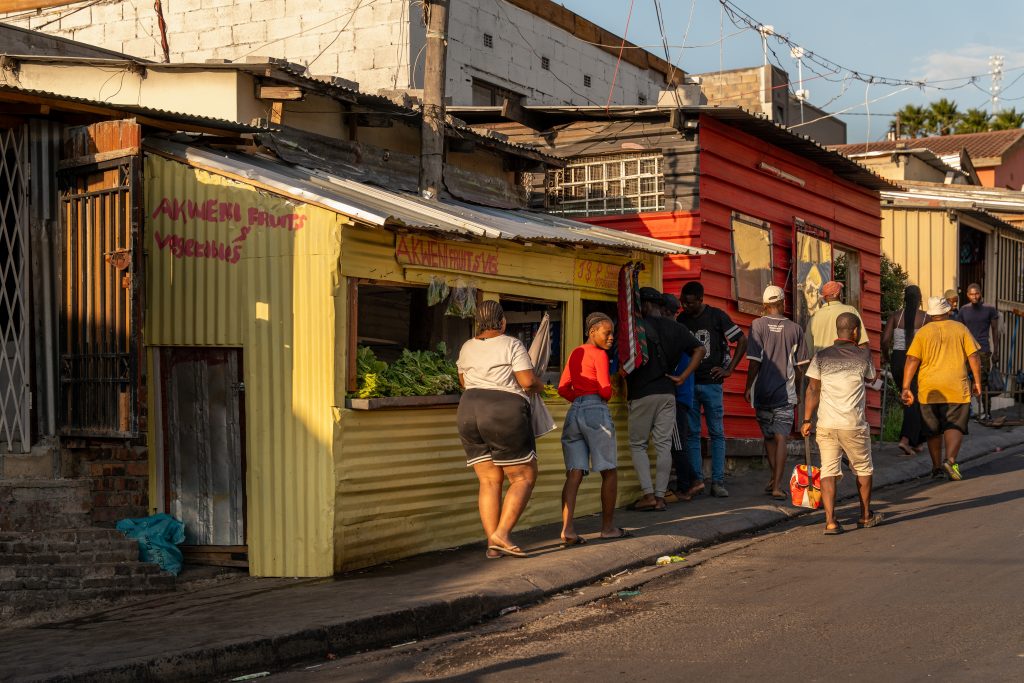
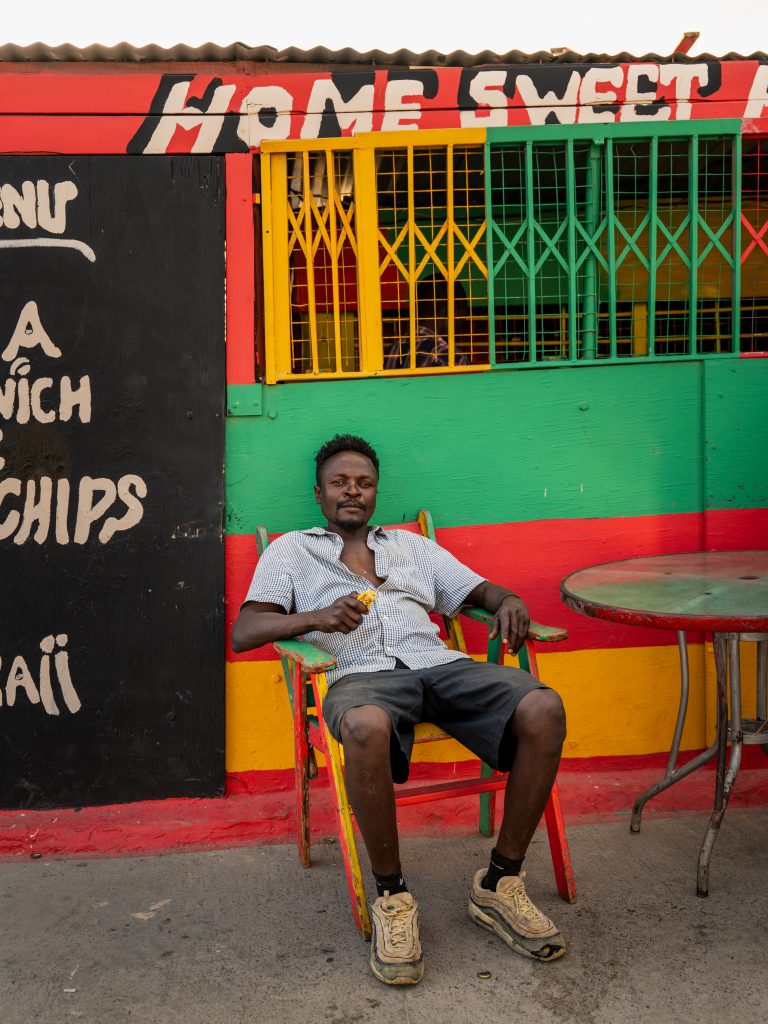
From here, we step into the township. Its hustle and bustle is almost overwhelming at first and I instinctively grab my camera a little tighter. The streets pulse with sound – voices in Xhosa, laughter, arguments, music spilling from phones, engines revving, horns blaring. Cars weave through narrow roads and honk if you don’t go out of their way fast enough. I nearly get hit multiple times. Then there are the smells, coming from all directions – smoke from an open fire, braaied meat, refuse baking in the heat. Along the main road, businesses line up shoulder to shoulder. A barbershop in a tin hut with 3 seats, a hardware store, internet cafés, bars, little grocery shops packed floor to ceiling. You can get everything in these shops that you can get in a normal supermarket – from canned beans and peanut butter to nappies, soap, and coffee machines. Wonga tells me about the Somali shopkeepers. Many arrived in South Africa seeking opportunity, however, they are often confronted with xenophobia and violence. Somali parents send their teenagers to South Africa to stay with a family member that’s running a shop in a township. The young adults stay with and work for the shopkeepers for three to five years without getting paid. At the end of the five years, they get the money they should’ve made over the years in a lump sum and have the choice – do they want to spend it, or do they want to use the capital to open a shop themselves? This is how Somali shops are spreading across the country’s townships, faster than locals can acquire capital to open up shops themselves.
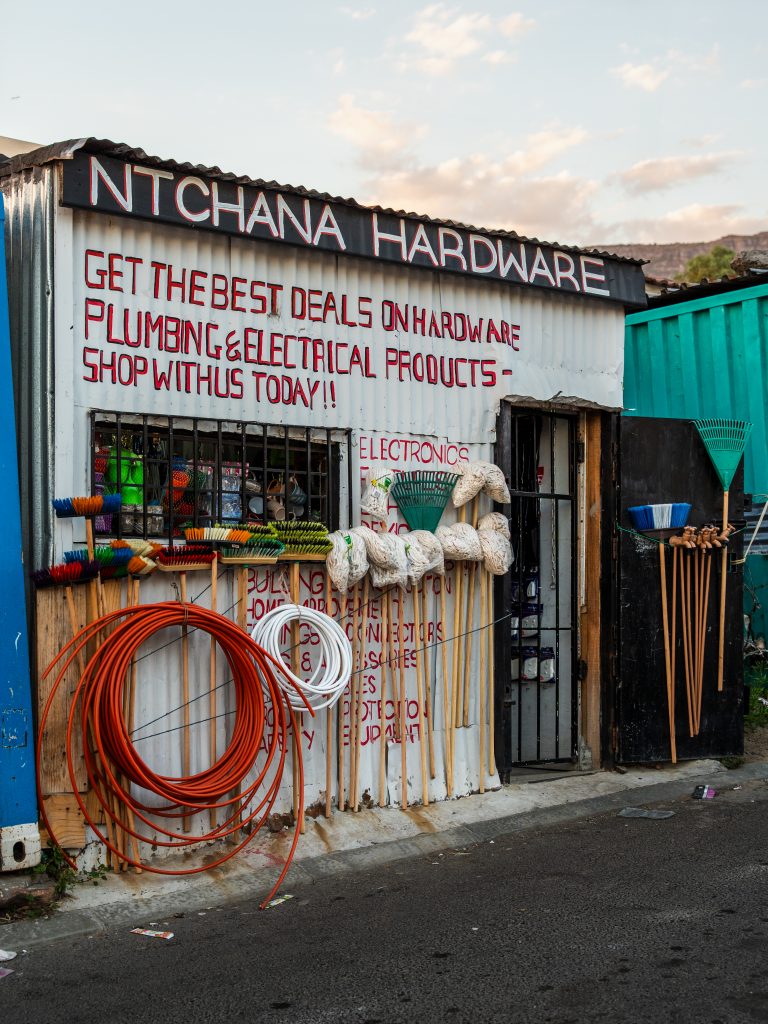
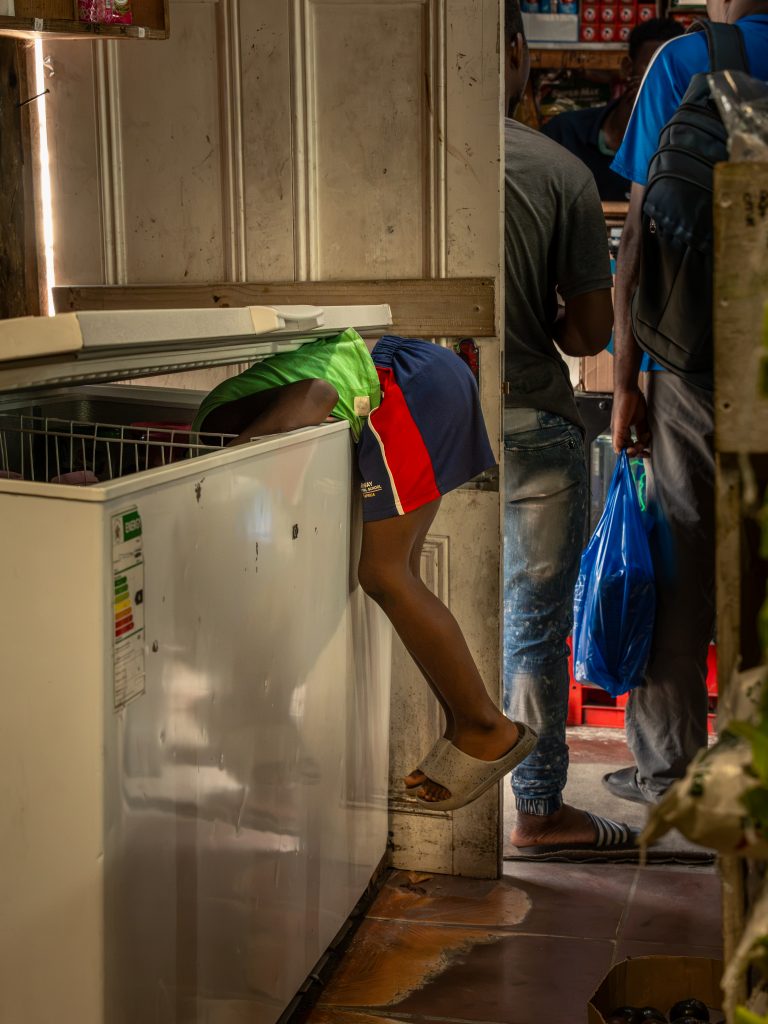
After a few minutes, I get used to all the new impressions, the chaos softens. And I begin to notice all the smiles around me, people greeting us, kids running over to give me high fives and fist bumps. The initial tension replaced by warmth and I feel very welcomed, despite clearly being foreign, and soon, I am the one greeting strangers with “molo molo”.
Our first stop is a small, unassuming house. Outside, a blackened pot sits over an open fire, steam curling into the air. Wonga grins when he describes the establishment as “that Korean of IY where the food has been cooking for decades non-stop in the same old black pot”. In front of the house is said pot over an open fire, steam escaping from under the slightly ajar lid. On the menu is cow’s head, boiled in the pot for hours and later grilled over open fire. The meat is served in a simple metal tray with seasoning and sauce, and to get the meat off the bones, I have to use both hands. The texture is fatty and the meat full of flavour, unlike anything I had tried before. We thank the chef – “Enkosi kakhulu” (Thank you very much) – and continue our walk.
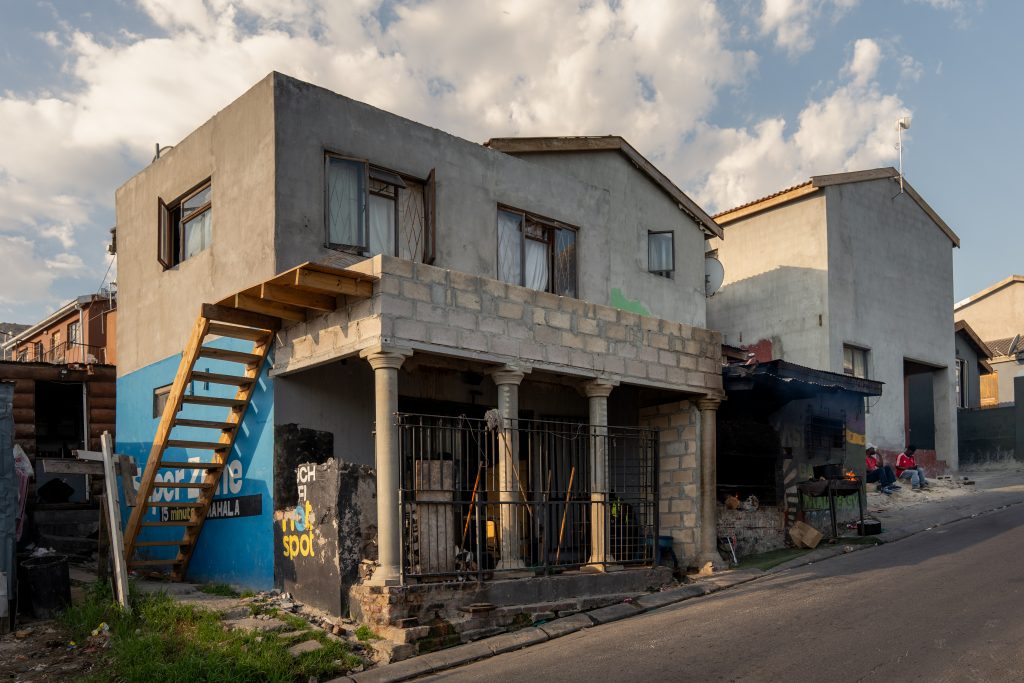
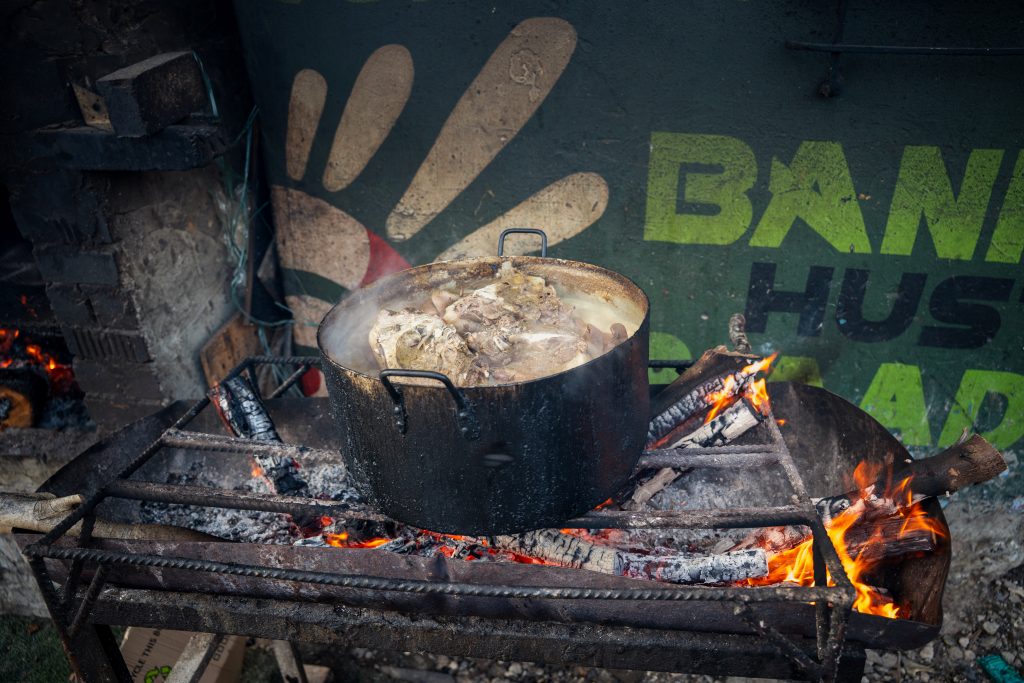
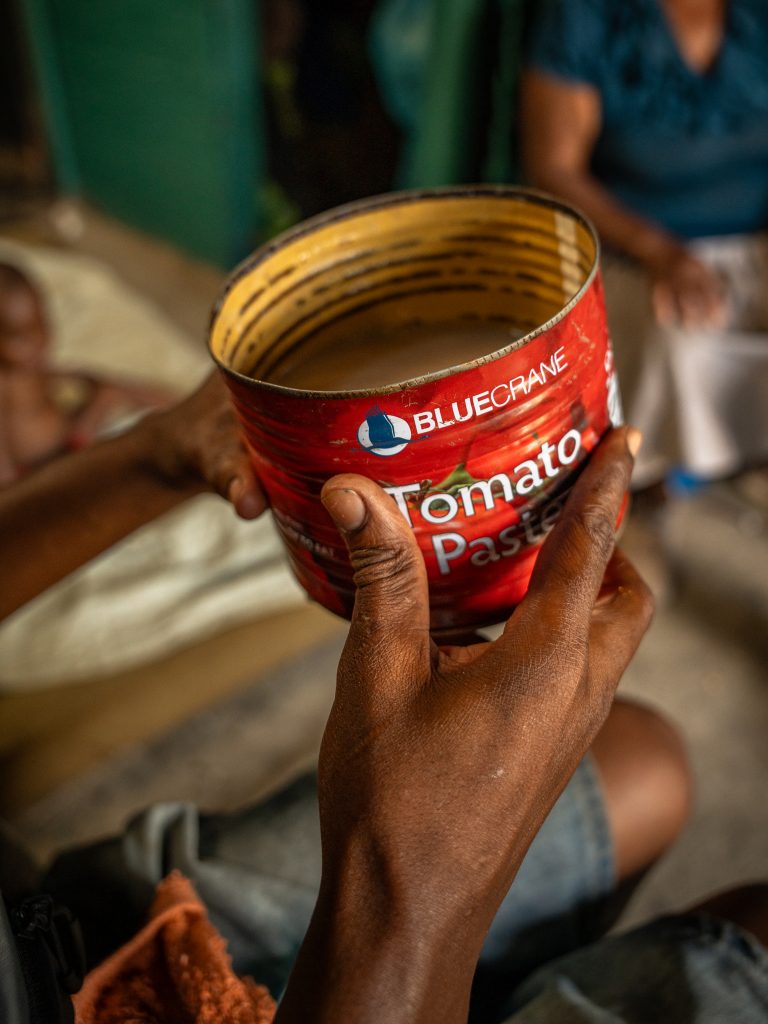
The streets twist and narrow as we climb higher, turning left and right into little alleyways. I lose all sense of direction. IY is a lot bigger than it looks from the outside I catch myself thinking, and there are people everywhere on the streets. Eventually, we go inside a little dimly lit hut. My eyes need a few seconds to get used to the darkness inside, but then I see three women and one man sitting on a worn-out sofa. On the floor, there is a mattress, and two small children are playing on it. I introduce myself and we sit down on the sofa. This is where we will try Umqombothi, traditional beer. The women get a big, old tomato can that is cut open at the top. It is used to serve the beer, which is stored in a large drum, known as a gogogo. The beer is made from maize, malt, yeast, and water and is thick, pale, and almost milky. The tomato can is passed around the circle and everyone takes a sip. Once it gets to me, I smell a strong, very distinctive smell. I take a sip. It has a heavy and distinctly sour aroma, but what surprises me most is the consistency – thick, creamy, and gritty. I pass it on to the next person again. The taste and texture is not unpleasant, but definitely something that I would need to get used to.
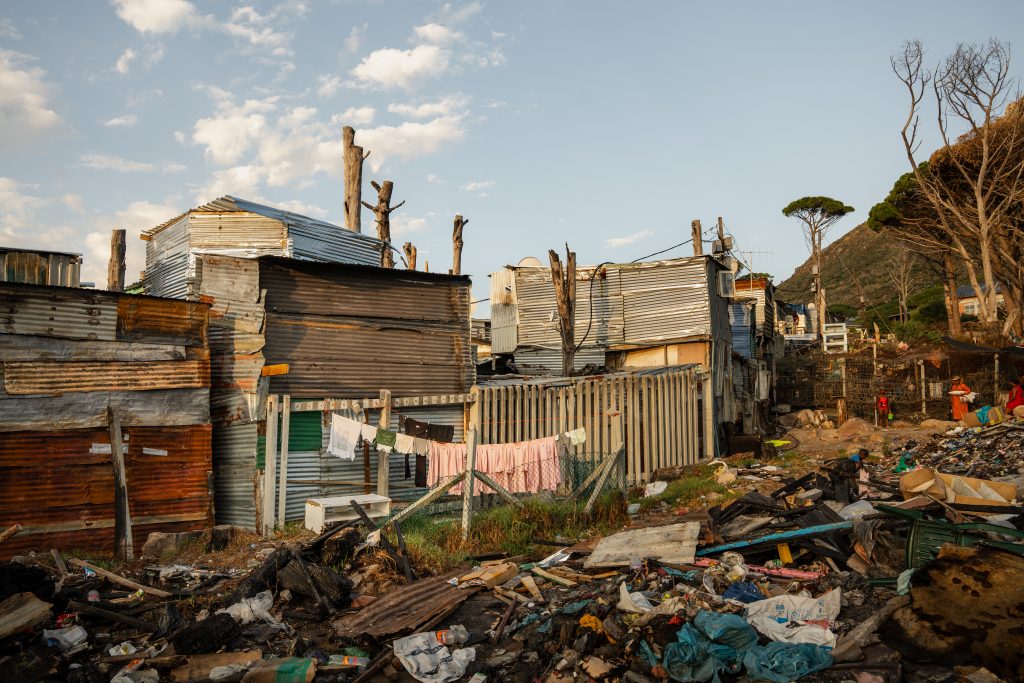
From here, we continue higher up the hill to an area that was hit by a large fire just a week before – the second fire in two weeks. 150 homes were destroyed and hundreds of people displaced. Ash still blankets the ground, burying the remains of the houses. I see pieces of corrugated iron, once the walls of someone’s home, ripped clothes, a teddy bear. A little boy is hitting a broken laptop with a broomstick he found in the ashes, laughing as the screen cracks further. It is heartbreaking to see people’s lives destroyed, all their belongings burnt and buried under ashes and dirt, fragments of lives reduced to debris. Wonga was lucky, his house is right at the edge where the fire stopped – unlike his neighbours’ house that is in ruins now. Yet, rebuilding has already started, and many people use the chance to upgrade their house to a two-storey building. However, fires here are constant threats and unless brick is used instead of tin and wood, it is only a matter of time until another fire sweeps through IY and destroys more homes. The hazards are manifold – IY is situated in a dry environment at the foot of a mountain with uncontrolled burns, cooking fires, faulty electrical connections, burning refuse, and regular gang conflicts. Often, the strong south-easterly winds can rapidly fan flames once a fire starts, and turn a small spark into a large fire.
On Hardships and Hope
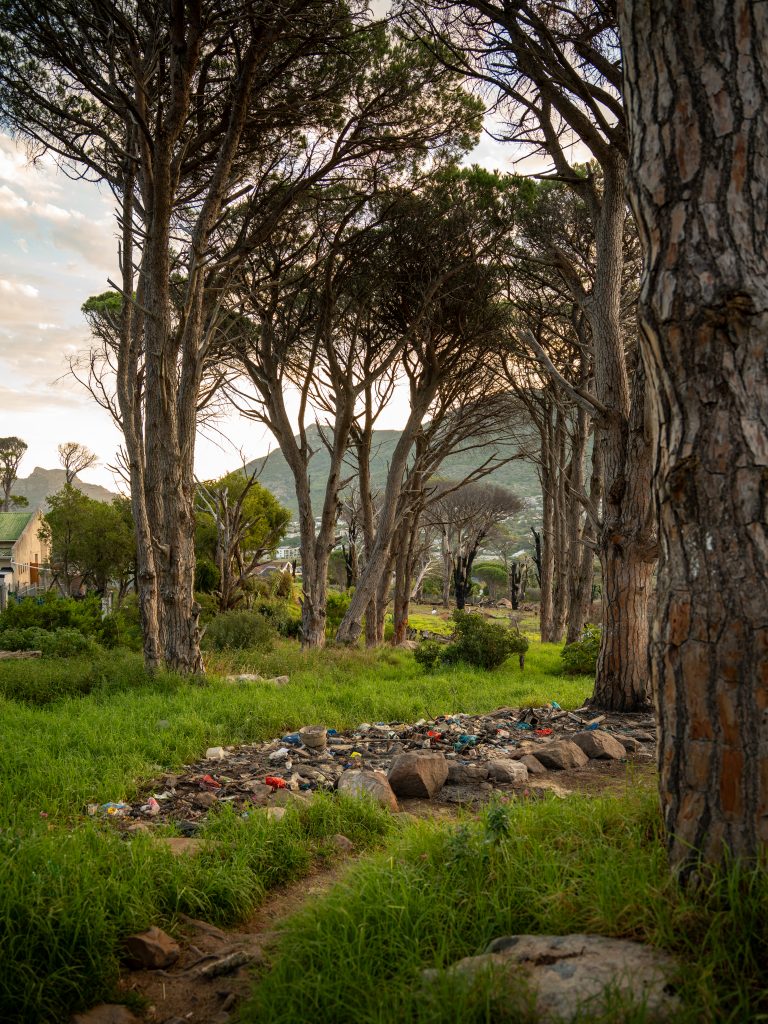
Right beside the burnt-out area, a narrow path leads upward toward the schools. Wooden planks form a makeshift walkway over piles of waste. Old plastic bags, bottles, unrecognizable objects, human feces. Children walk this path every morning, clapping their hands to scare away rats. I can’t believe that this is the reality for thousands of kids every single day. How is that compatible with human rights? Township life can be hard for children, navigating adolescence and simultaneously being confronted with alcohol and drug abuse, teenage pregnancy, and high school dropout rates – all while looking at the wealth on the opposite side of the valley, a constant reminder of their situation. Many see no hope for their future and turn to drugs, gangs and violence to survive. A perpetuating cycle of poverty and hopelessness.
Wonga stops to show me another side of his work – a small community farm with geese, chickens and two goats. Children can buy a chicken and sell the eggs to nearby AirBnBs and guesthouses, and get to keep the capital in return. If they have sold enough eggs, they can invest in a second chicken. This way, he aims to teach the children the importance of working hard to make money, saving up and re-investing instead of living from day-to-day. Showing them that there is hope, that there are opportunities to improve their lives no matter how small. Projects like these, that take the children off the streets and offer them perspectives, are what truly makes a difference in the community.
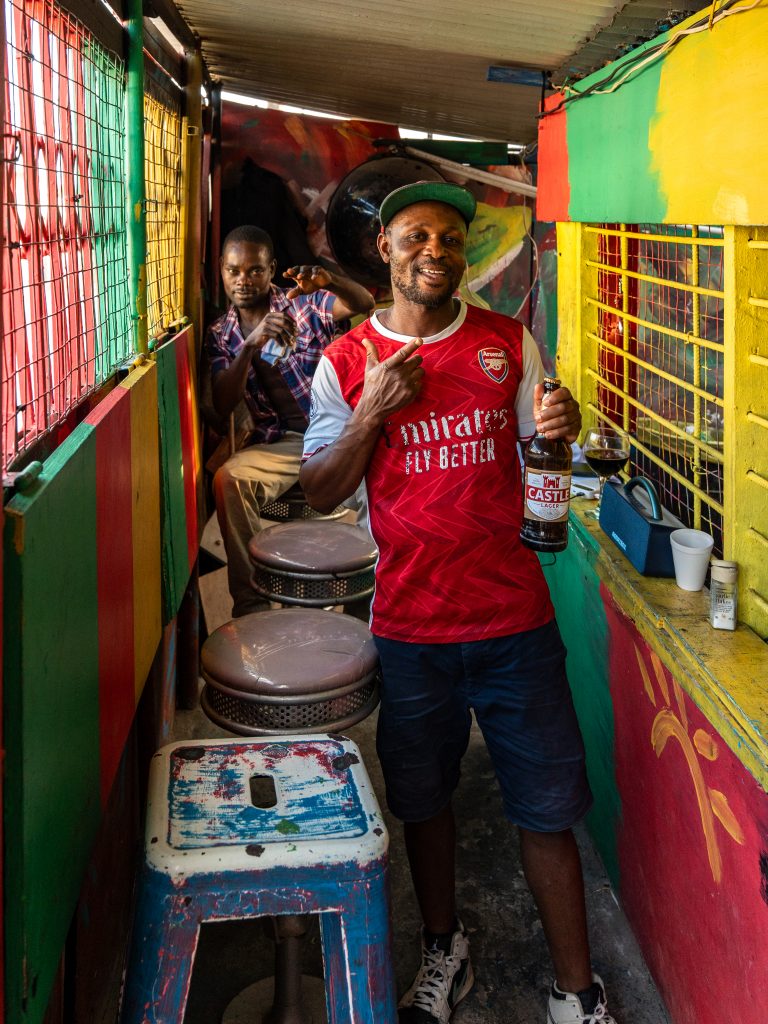
As the sun is setting behind the mountain, we arrive at the penultimate stop of the tour, Phillip’s Tavern. It is one of the two only taverns that are officially licensed to serve alcohol in the whole township, and it is a popular meeting point for locals. Even today, on a Wednesday it is busy, but it gets especially packed on the weekends. Phillip came from Namibia and started his tavern as a little shack, but over time has transformed into a two-storey brick house. Before he was licensed, the police regularly confiscated all his drinks, yet he managed to build his tavern into what it is today. People are playing pool, watching football, and sharing drinks with their friends outside. Everyone is on the streets, even in the evenings. It is that feeling of togetherness once again that is so striking to me, a stark contrast to the highly individualised society that I am used to.
On the way to dinner, we pick up a Vetkoek from one of the street vendors, a traditional South African fried dough bread. Even at night, the township doesn’t sleep and it is no issue to find open commerce – people are still on the streets selling their fresh produce, meat skewers and other small essentials. Because of the increasing rates of international immigration from other parts of Africa, you can find a lot of products from other countries in the township such as traditional Malawian dried fish and legumes and groundnuts from Zimbabwe and Zambia. When we arrive in the family’s home, dinner is already on the table. Wonga’s neighbour has prepared Umphokoqo for us – a traditional Xhosa dish consisting of crumbly, dry-cooked maize meal served with cold Amasi (sour fermented milk) and cream. She added cranberries and coconut flakes that add a perfect touch of sweet and tangy to the creamy mixture. The Umphokoqo is paired with a chicken neck stew that is rich and flavourful. It is a perfect comfort meal to enjoy on a hot summer’s day and to end an afternoon filled with new impressions and flavours.
As we say goodbye, I now understand what Wonga meant when he said “I don’t have Tours, I have friends coming over, WongaTours family members”. It was an invitation to see, feel, imagine, connect. I leave with a sense of gratitude for today’s experience, the openness and inviting nature of the many people that shared their home with me. I also leave with something heavier. A deeper awareness, a recognition of both the hardship and the resilience that coexist here. The feeling of having been part of something bigger. But, despite everything, I leave with hope. Because if there is one thing that defines Imizamo Yethu, it is not just struggle – it is effort. Shared effort. And perhaps, that is where change begins.
Tours with Wonga can be booked directly by sending him a message or giving him a call under +27 84 453 6076 or emailing wongatours@gmail.com.
[elementor-template id=”9641″]